

National Resilience FAQ's
Protective equipment, decontamination and support for the UK’s emergency responders
DOWNLOAD RESILIENCE BROCHURE CONTACT SALES
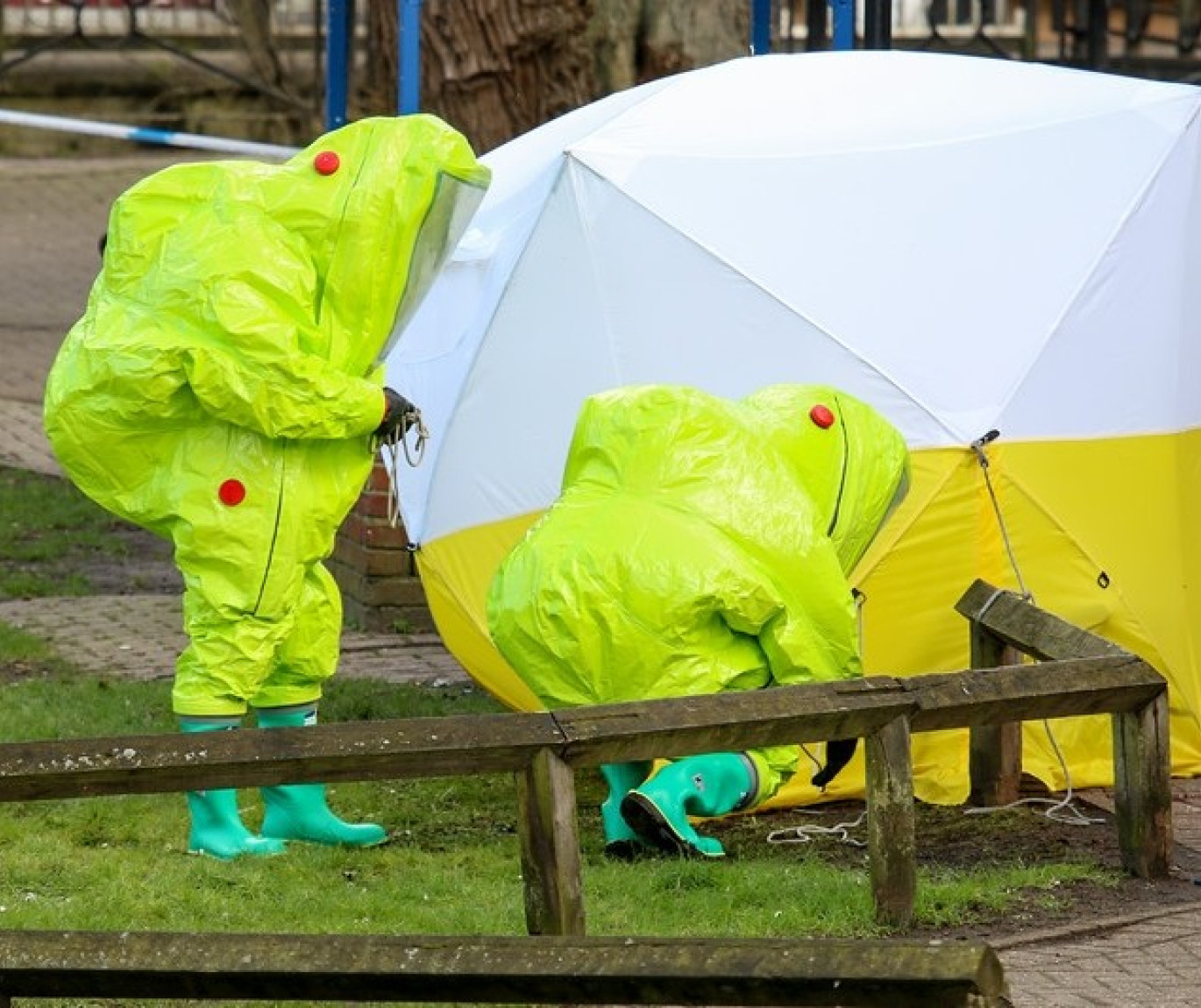
When a chemical release, hazardous materials spill or deliberate CBRN attack happens, the people who go towards it need equipment they already know and trust. Respirex designs and manufactures gas-tight suits, powered respirator suits, protective footwear and decontamination systems for exactly those moments. Our equipment is already in service with fire and rescue services, police CBRN teams and NHS trusts across the UK, and we support it for its whole working life.
The UK's approach to emergencies relies on Category 1 and Category 2 responders planning together through Local Resilience Forums, so that when something serious happens, every agency can step in quickly and work side by side. That only works if the kit is ready too. A suit that has passed its shelf life, a decontamination shower nobody has practised with, or a respirator that does not fit the person wearing it can slow a response at the worst possible time.
We work with resilience teams to get those details right. That means equipment that is easy to store and quick to deploy, suits that come in the right sizes for your teams, training that reflects real incidents, and a servicing programme that keeps everything certified and ready.
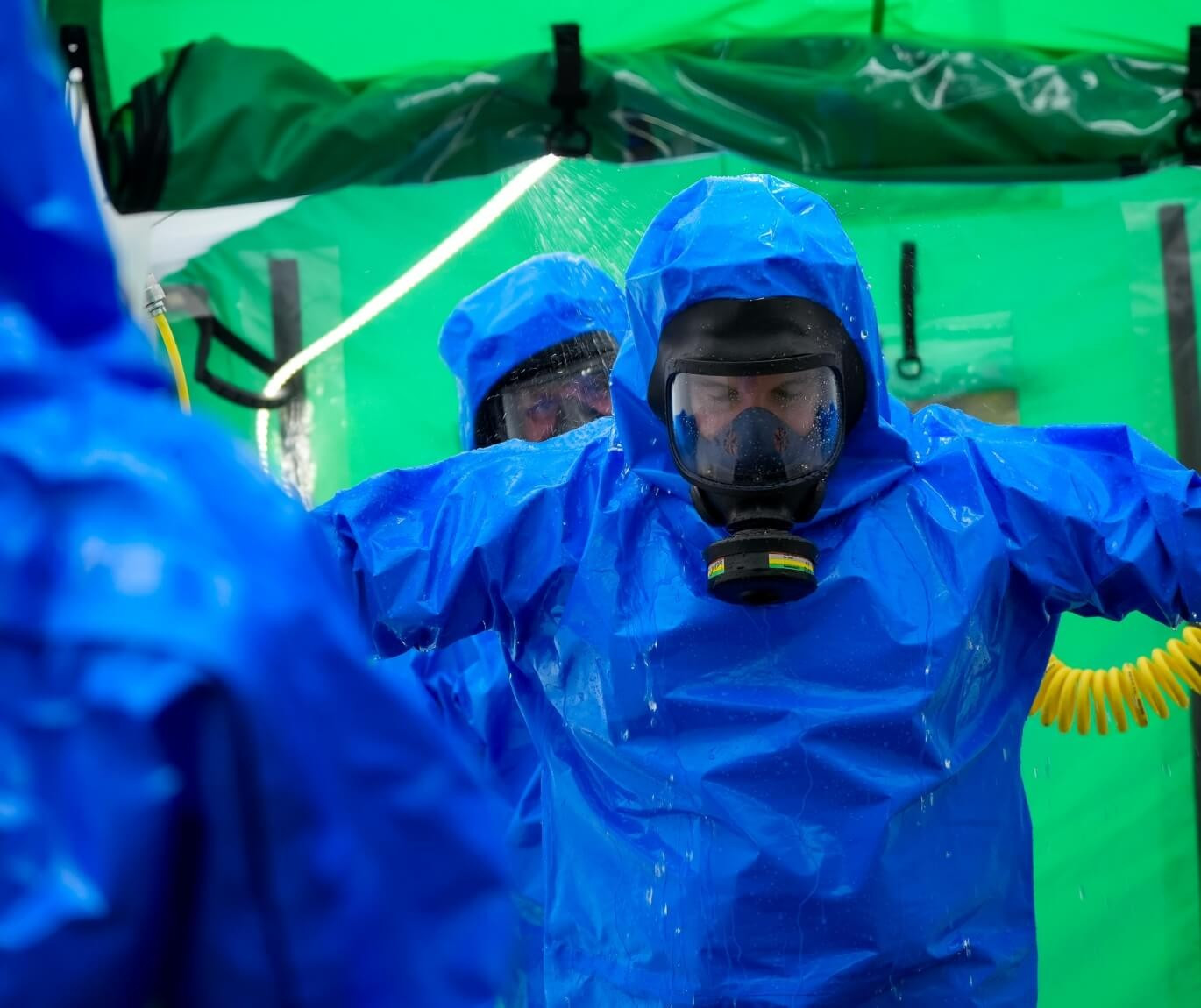
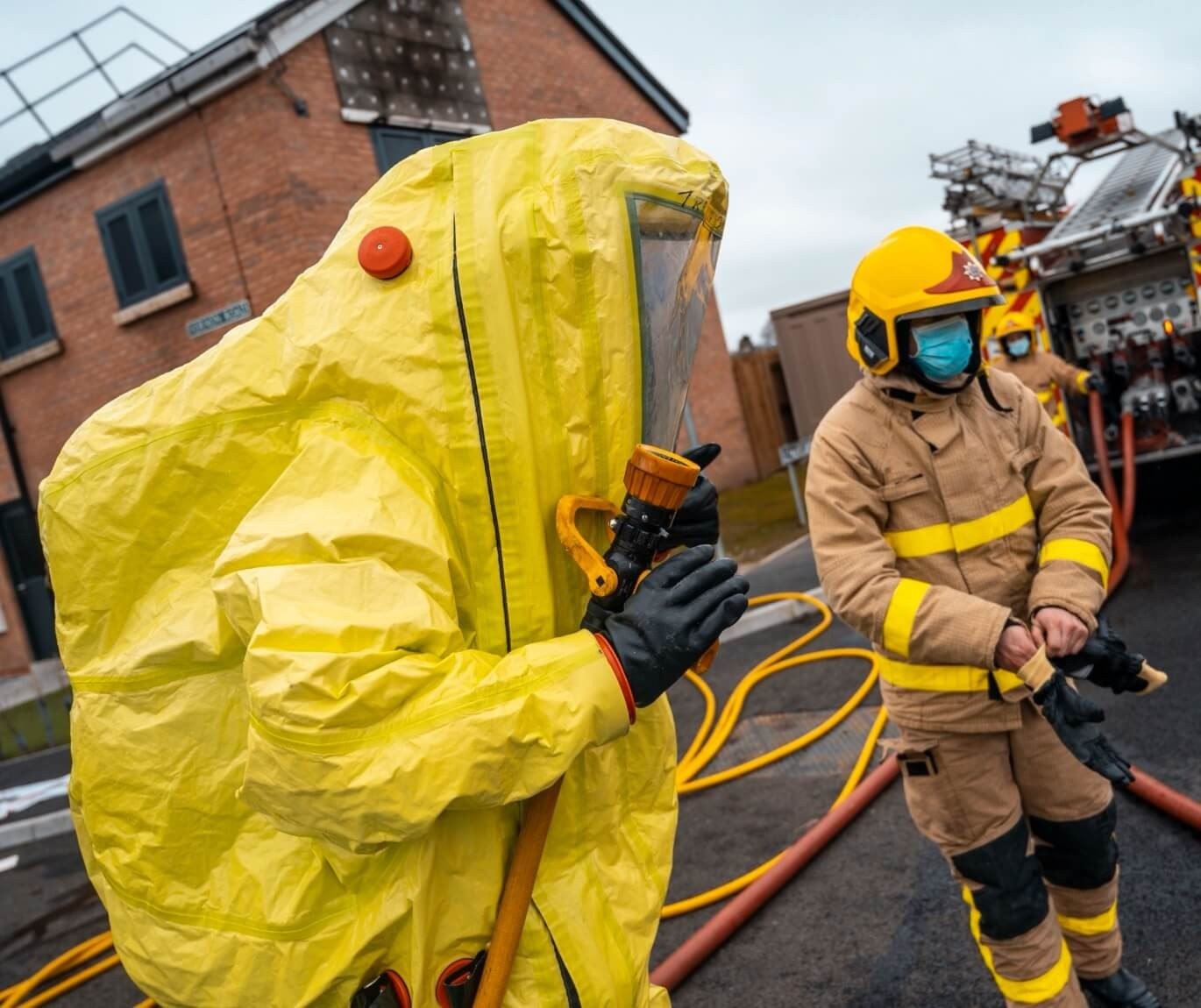
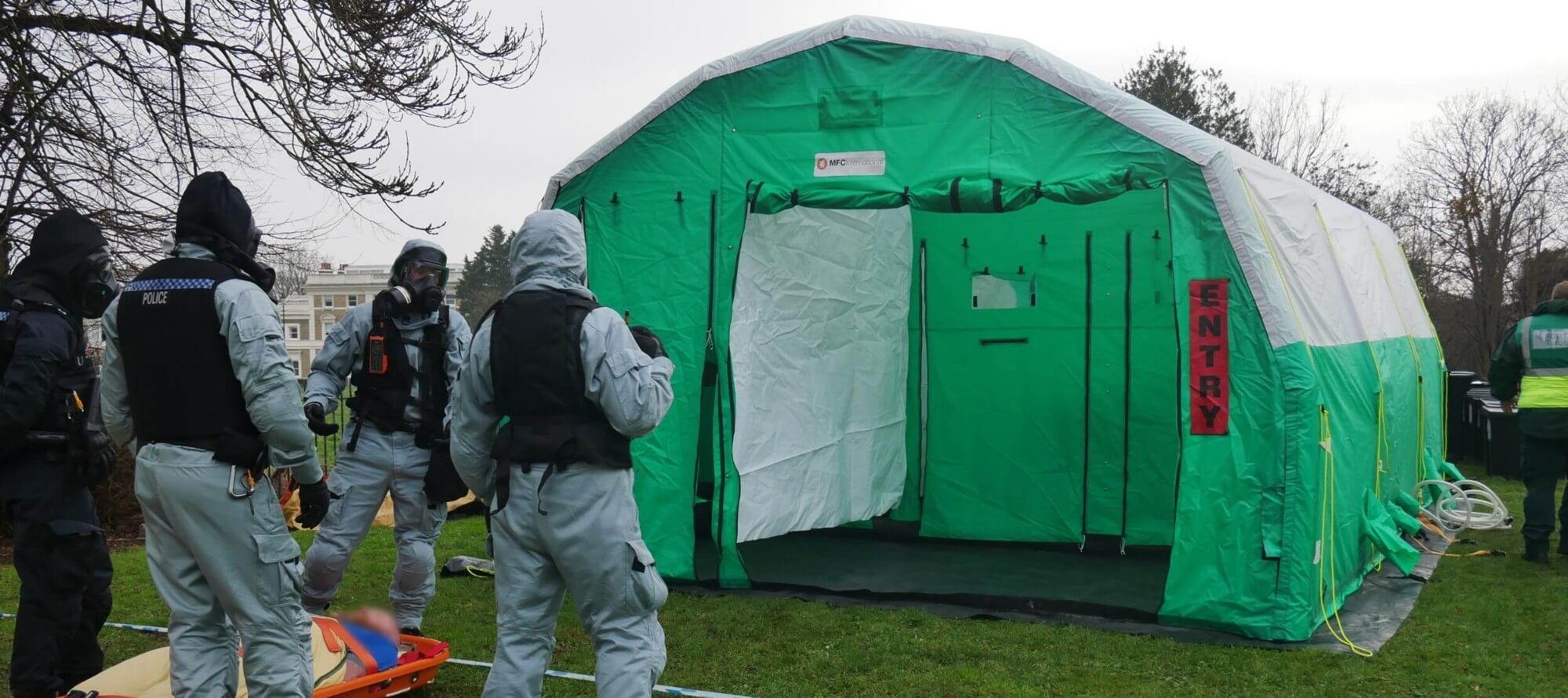
Fire and rescue crews are usually first on scene at a hazardous materials incident and lead on mass decontamination of the public. Our EN 943-2 gas-tight suits for emergency teams, liquid-tight splash suits and chemical protective boots give crews the right level of protection for the job in front of them, while our inflatable decontamination showers can be set up in minutes to treat large numbers of casualties. For flood response, our sister company MFC International supplies water storage, water rescue equipment, lifting solutions and decontamination systems used by fire services.
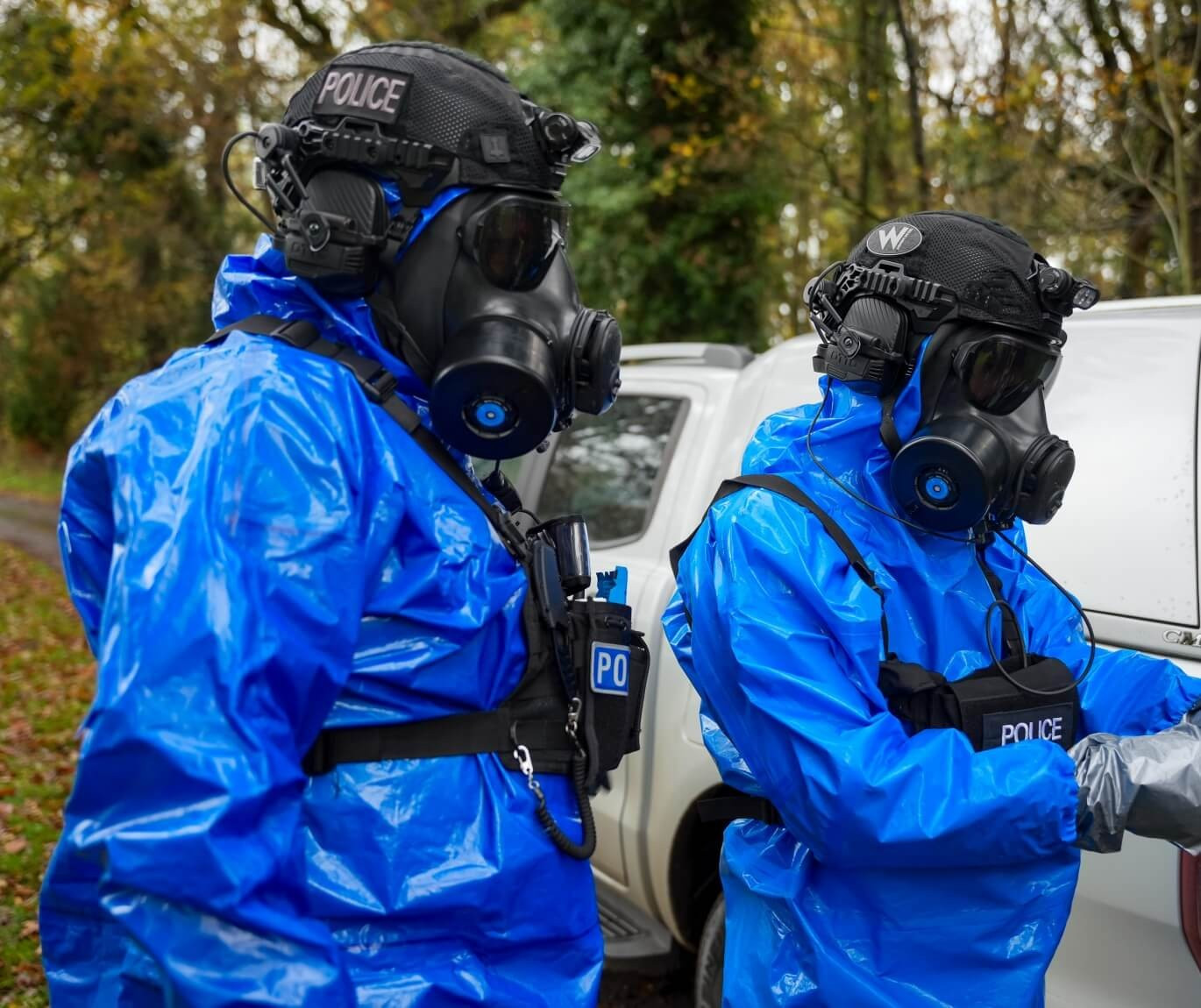
Police officers trained in CBRN response are often asked to manage cordons and control access to the hot zone, sometimes for long periods. The Powered Respirator Protective Suit (PRPS) was developed with this kind of work in mind. Its belt-mounted powered respirator and loose-fitting hood remove the need for a tight-fitting face mask, keeping officers cooler and more comfortable so they can stay focused. We also supply single-use splash suits, Kemblok™ chemical protective gloves and CBRN overboots for wider police CBRN capability.
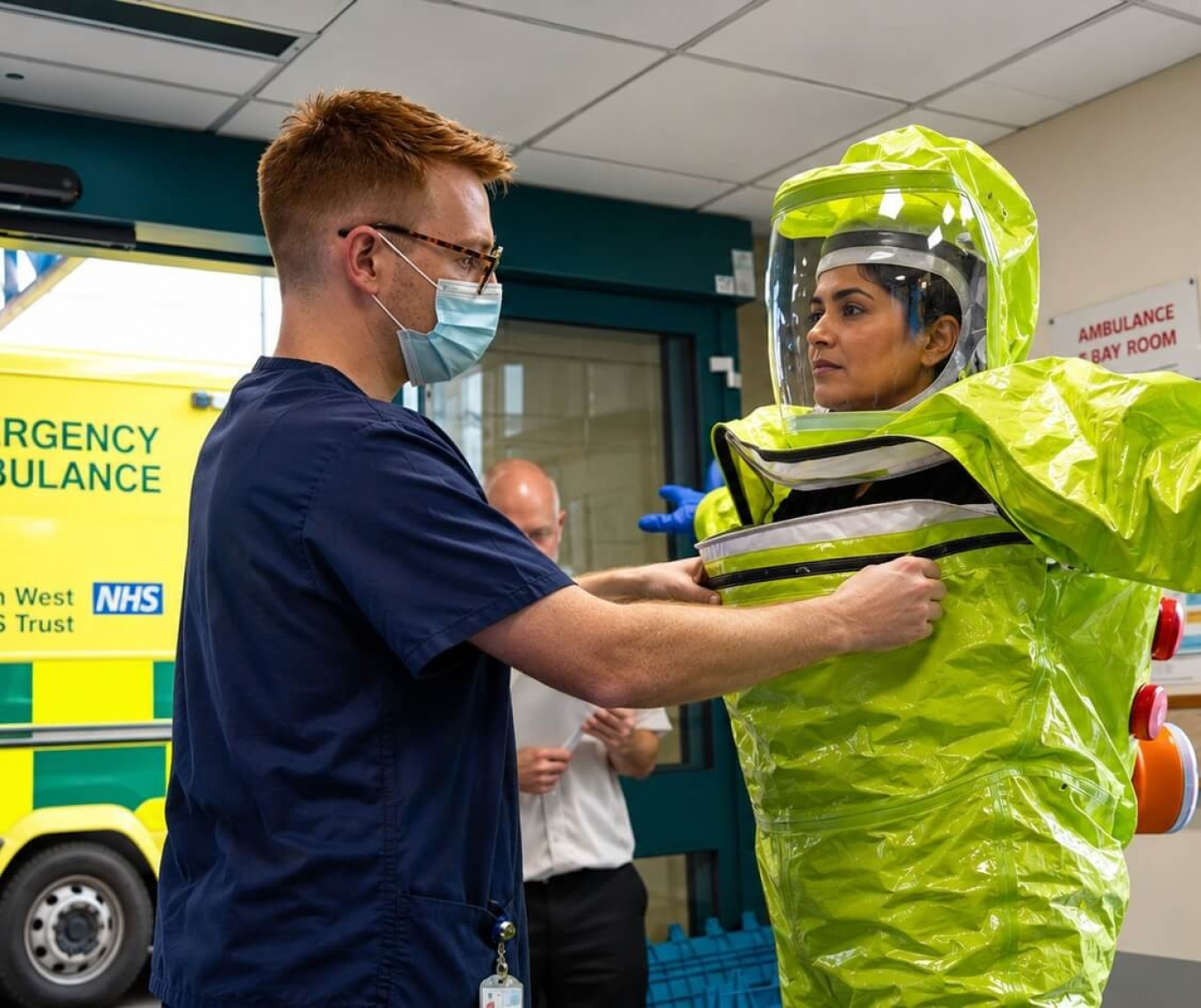
After a chemical or biological incident, contaminated people do not always wait for an ambulance. Many will walk into the nearest emergency department. Hospitals need to protect their staff, treat those patients quickly and keep the rest of the building safe. PRPS is used by NHS trusts for exactly this purpose, alongside our single assisted decontamination shower for patients on a spine board, pre and post decontamination modesty packs in sizes from infant to large adult, and a casualty transport bag that protects staff, vehicles and facilities when moving contaminated patients.
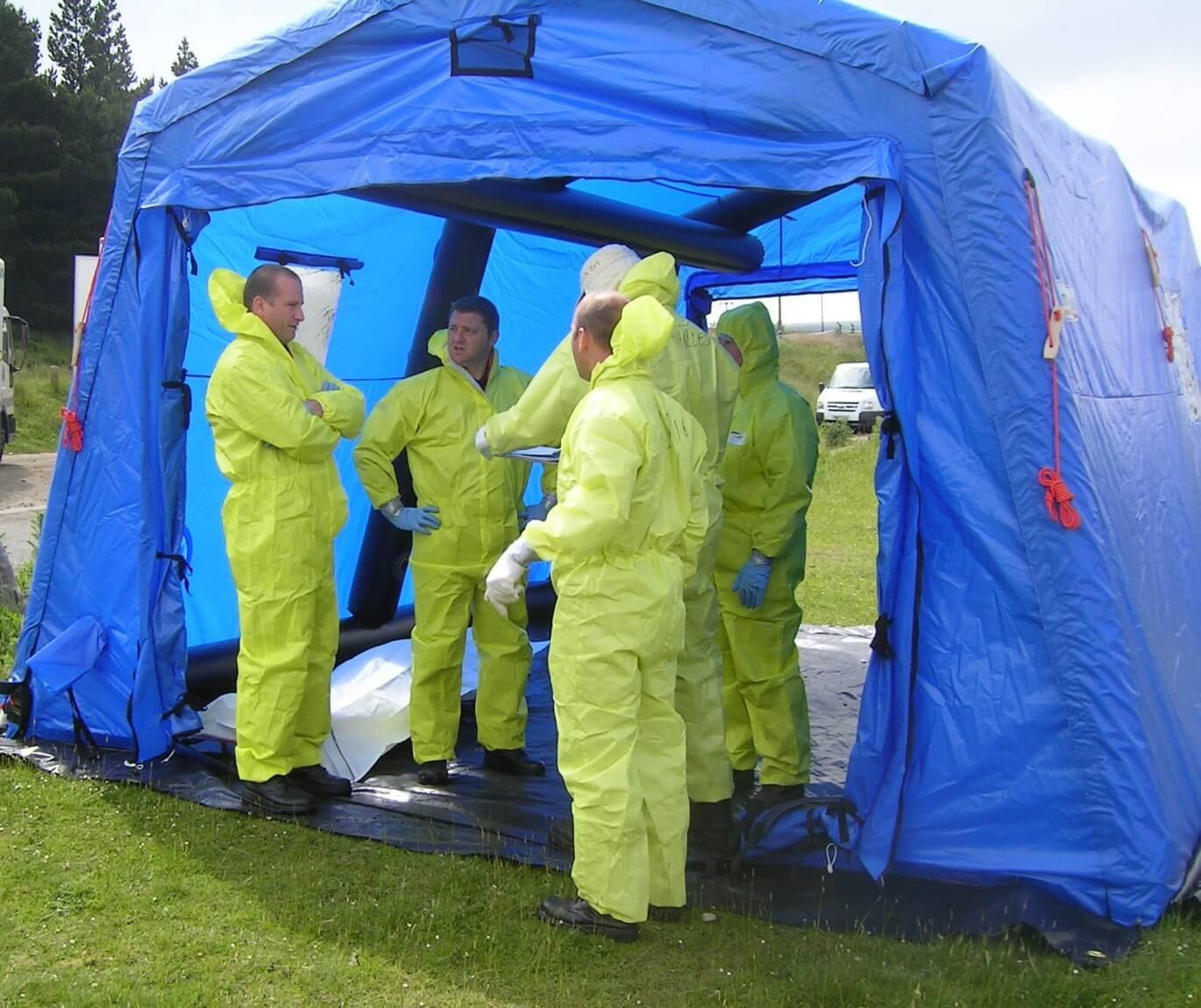
A large-scale emergency needs more than personal protective equipment. Our inflatable shelters can be used as field hospitals, command posts or welfare areas and stay up without continuous inflation. For the most difficult part of any mass casualty incident, our gas-tight CBRN body bag safely contains contaminated fatalities and supports disaster victim identification work.
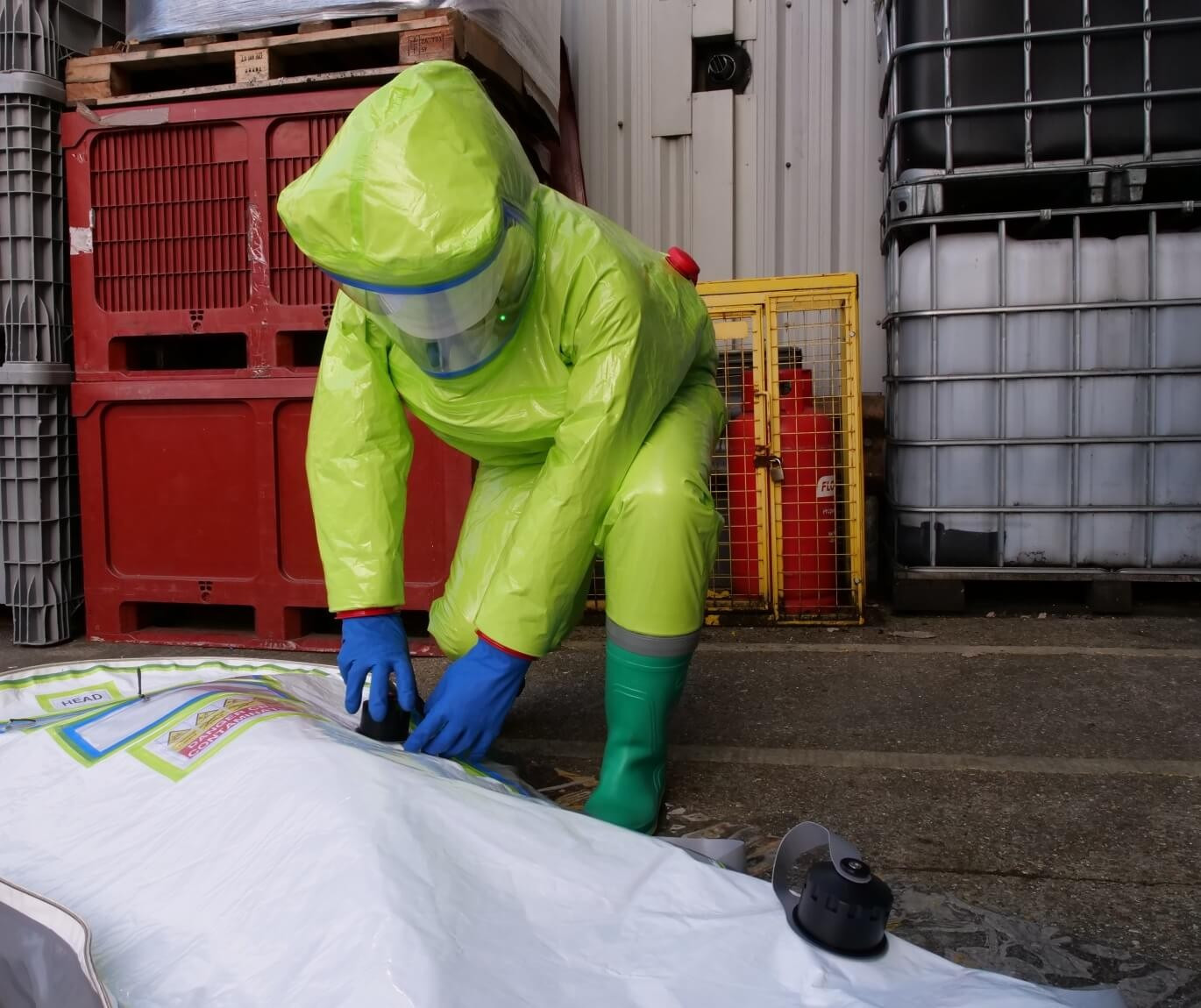
PRPS 3 is a one-piece gas-tight suit for emergency teams working after a CBRN incident. It is made from DuPont™ Tychem® TK, a seven-layer chemical barrier fabric, and uses a belt-mounted CleanAIR® Chemical 2F powered respirator with twin external CBRN filters. A display at the base of the hood shows airflow, battery and filter status at a glance. Gas-tight locking cuffs allow for rapid glove changes, and Hazmax™ boots are permanently attached to simplify donning. The suit meets EN 943-2 for gas-tight (Type 1) chemical protective suits for emergency teams.
Our fully encapsulating gas-tight suits are designed for breathing apparatus worn inside the suit. This gives the wearer the highest level of protection and makes decontamination simpler afterwards. All three are certified to EN 943-2 Type 1A (ET), so teams can choose the suit that best fits how often they respond and what they expect to face.
GTB: a reusable suit with enhanced robustness.
GTR: a regular robustness gas-tight suit.
GTL: a single-use suit with regular robustness.
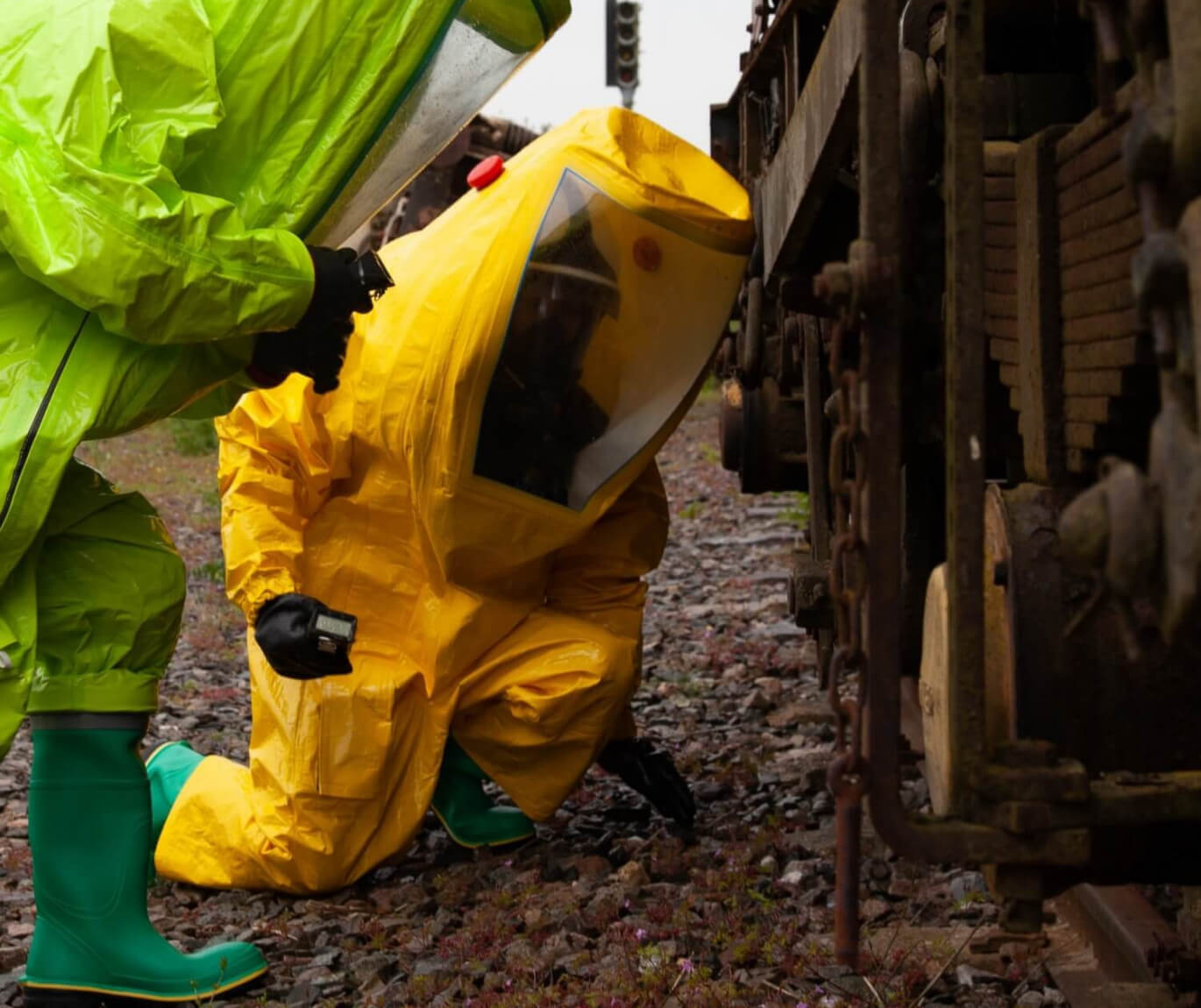

Not every incident needs a gas-tight suit. Our Type 3 liquid-tight splash suits are a practical choice for decontamination teams, warm zone work and incidents where the risk is not immediately dangerous to life. The single-use SC1 is made from Chemprotex™ 300 and protects against liquid chemicals, infective agents and chemical warfare agents. The SC4 is a fully encapsulating splash suit worn over breathing apparatus, and the lightweight Splashmaster coverall is designed for use with a full-face mask and filter.
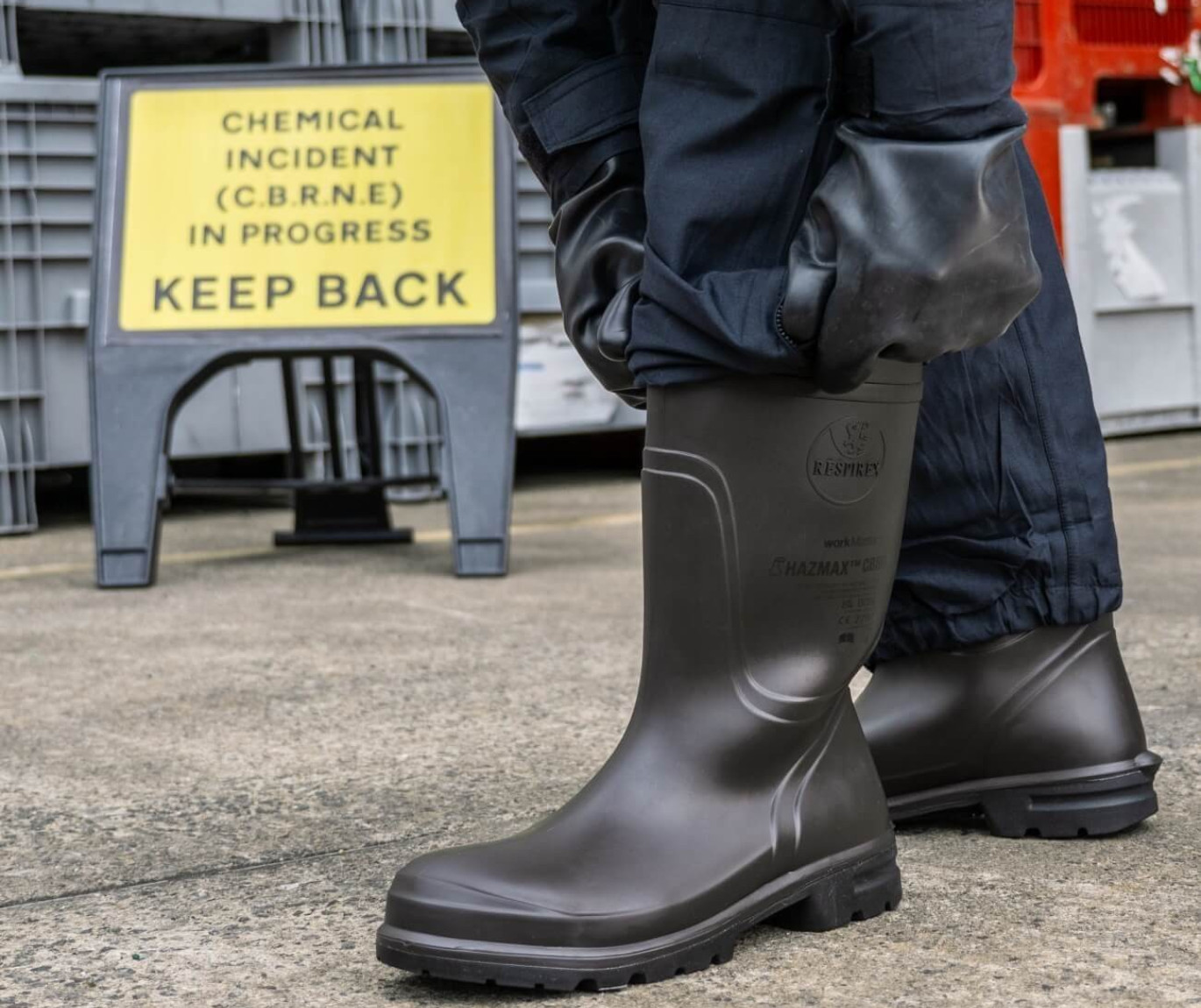
Hazmax™ CBRN boots are certified to EN 13832-3:2018 for chemical protection, with a steel toe cap, midsole and slip-resistant vulcanised rubber sole. Our ambidextrous CBRN overboots, made by WorkMaster™ Boots, are quick to put on and simple to stock because one design fits either foot. Kemblok™ gloves complete the system with chemical and microorganism protection to EN 374.
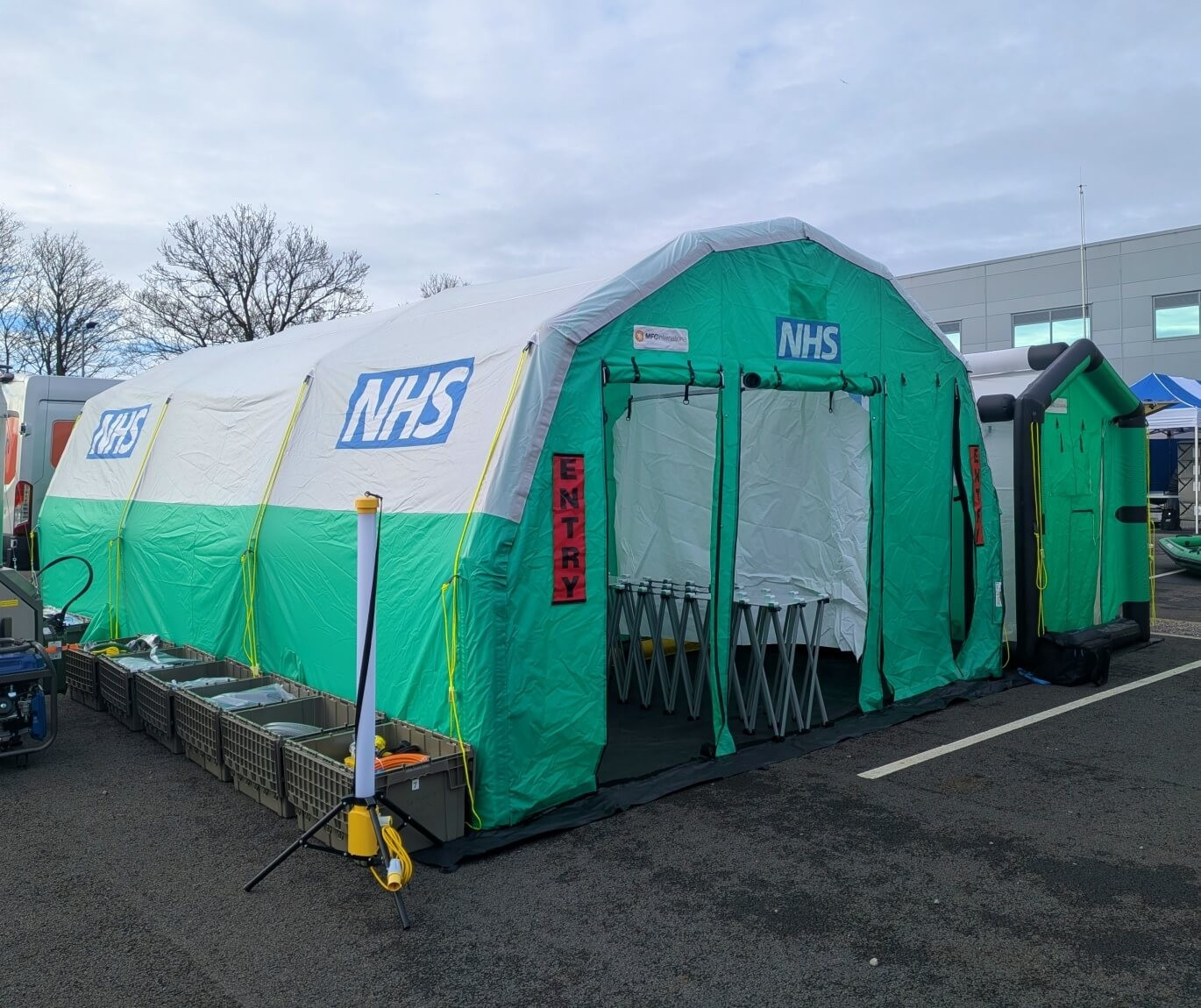
Our inflatable decontamination showers are made by MFC International, part of the Respirex group of companies. They are much lighter than traditional metal-framed showers and quick to deploy when every minute counts.
Mass Decontamination Shower: three separate lanes for male, female and assisted decontamination, each with screened changing areas and separate cleanse and rinse stations.
Four Person Decontamination Shower: a compact unit with two lanes for responders or casualties.
Single Assisted Decontamination Shower: designed for a casualty on a spine board with two medical staff, with pass-through ports and front and rear doors.
Single Decontamination Shower: a lightweight option for one person, with optional sleeves so a helper can assist from outside.
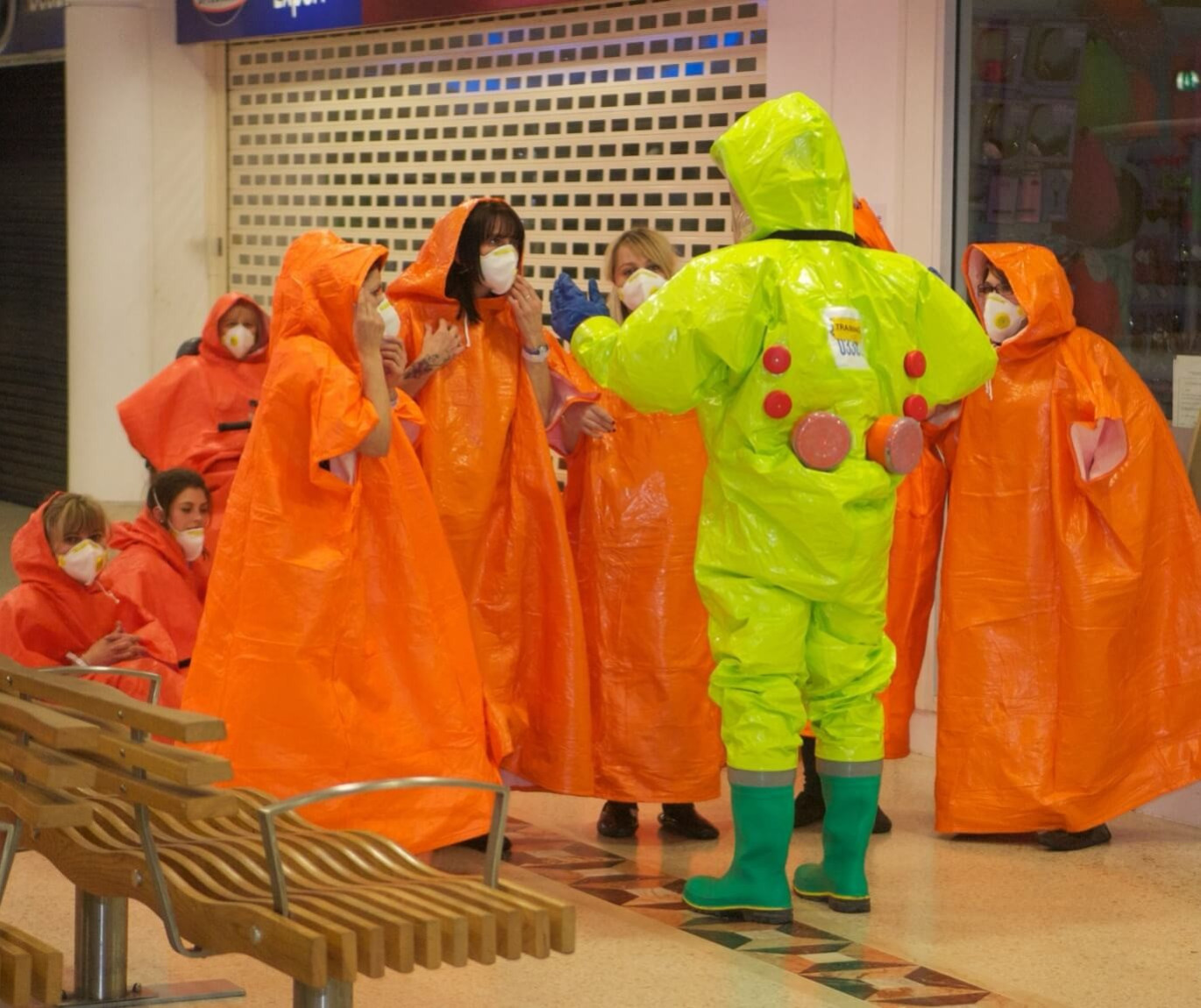
Pre and post decontamination modesty packs help casualties change out of contaminated clothing with as much dignity as possible. Our casualty transport bag protects ambulance crews and receiving hospitals, and our CBRN body bag is pressure tested for gas-tightness to ISO 17491-1:2012.
Buying the right equipment is only the start. Stockpiled resilience kit has to work years after it was delivered, often by people who use it a few times a year. We help you keep it that way.
Servicing, Testing and Recertification: Our ServiceTech team carries out servicing, gas-tight testing, repairs and recertification on Respirex suits, including PRPS. Regular checks extend the working life of your stock and give you a clear record that every suit is fit for use.
Training: We offer training suits and hands-on PPE training so your teams can practise donning, doffing and decontamination without using operational stock. Teams that train with the same equipment they will wear on the day are faster and more confident when it counts.
PermaSURE Toxicity Modeller: PermaSURE is our free app for iOS and Android. It uses a database of more than 3,000 chemicals to estimate how long a wearer can safely work in a given suit, based on real conditions at the scene. It gives incident commanders a quick, evidence-based answer to one of the most important questions on the day.

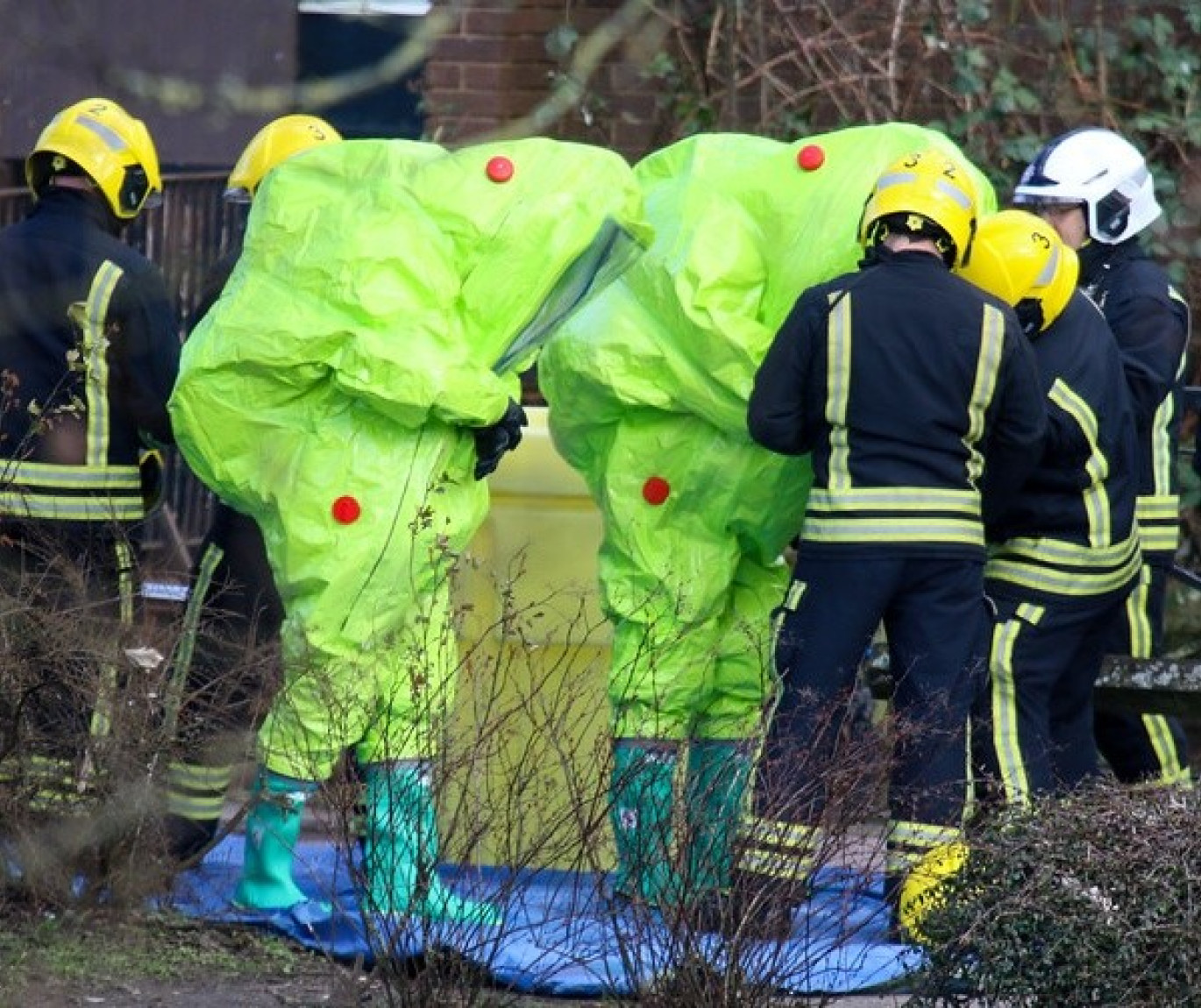
Our suits are already in service across UK fire and rescue, police and NHS resilience teams, so equipment and training are consistent between agencies that work together. We design and manufacture our own protective clothing, so we understand every seam, zip and fabric we supply. One group covers personal protection, decontamination, footwear and water rescue, giving you a single point of contact for your whole resilience capability. Our ServiceTech team supports your equipment for its full working life, from first delivery to final recertification. Our Chemline service and permeation data help you choose the right protection for the chemicals you are most likely to face.
National resilience is the UK's ability to prepare for, respond to and recover from serious emergencies. It brings together government, the emergency services, the NHS, local authorities and other organisations so they can plan and respond as one. Specialist protective equipment, decontamination capability and trained people are a key part of that.
It depends on the role and where you are working. Teams entering the hot zone usually need a gas-tight suit with breathing apparatus or a powered respirator. Those working in the warm zone, such as decontamination teams, may use a liquid-tight splash suit. Chemical protective boots and gloves complete the system. Our team can help you match the right level of protection to each role.
PRPS stands for Powered Respirator Protective Suit. It is a gas-tight chemical protective suit with a built-in powered air purifying respirator, so the wearer does not need a tight-fitting face mask or breathing apparatus. It is used by UK fire and rescue services, police CBRN teams and NHS trusts.
Our inflatable showers are designed for rapid deployment and are far lighter than metal-framed alternatives, so a trained team can have them ready in a short time. We recommend regular exercises so your team knows the set-up procedure well.
Shelf life varies by product. Several of our suits and components have a 10-year shelf life, and regular servicing and recertification through ServiceTech can help you get the full working life from your stock. Contact us for details on a specific product.
Yes. We supply training suits and offer practical training on donning, doffing, use and decontamination through ServiceTech.
Enquiry Submitted Successfully